
Data-Driven Marketing
If you’re a business owner or marketer looking to turn more clicks into customers, data-driven marketing is your ultimate secret weapon. Unlike traditional marketing, which often relies on guesswork, data-driven marketing leverages real, measurable customer data to inform your campaigns, improve targeting, and ultimately increase sales.
With the right data strategy, you can understand who your audience is, what they want, and how they interact with your brand. This guide will walk you through practical steps—from collecting data to optimizing campaigns—so you can make informed decisions that lead to real revenue growth.
Why Data-Driven Marketing Matters for Sales?
Data-driven marketing isn’t just a buzzword—it’s a framework that turns insights into action. Here’s why it matters:
- Precision Targeting – Using data, you can identify the exact audience most likely to convert. This reduces wasted ad spend and ensures your marketing messages reach the right people at the right time.
- Customer Insight – Data provides insights into customer behaviors, preferences, and pain points. Understanding this allows you to craft offers and campaigns that resonate with your audience.
- Personalized Marketing – Personalized campaigns outperform generic messaging. Data helps tailor emails, product recommendations, and ads, which increases engagement and conversion rates.
- Constant Optimization – Real-time data enables ongoing campaign improvements. You can quickly adjust strategies, creatives, or targeting based on what’s working best.
- Better ROI – Smarter campaigns and optimized budgets result in higher returns on ad spend (ROAS) and lower customer acquisition costs (CAC).
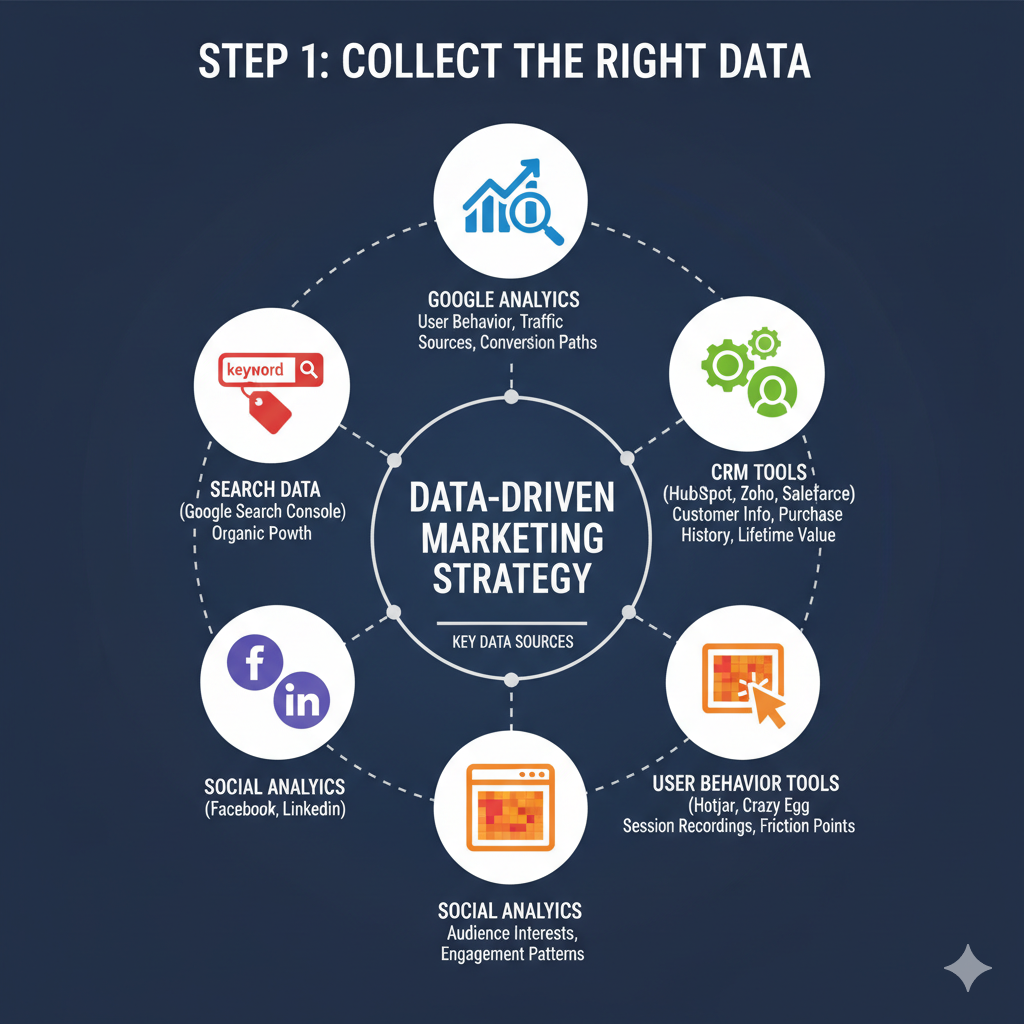
Step 1: Collect the Right Data
The first step in any data-driven marketing strategy is gathering accurate and meaningful data. Without quality data, all your marketing decisions are essentially guesswork.
Key Data Sources:
- Google Analytics: Track user behavior, demographics, traffic sources, and conversion paths. Analytics reveal where users drop off and which content drives engagement.
- CRM Tools (HubSpot, Zoho, Salesforce): Store detailed customer information, purchase histories, and lead interactions. This data helps you understand lifetime value and predict future behavior.
- User Behavior Tools (Hotjar, Crazy Egg): Heatmaps, session recordings, and feedback forms show how users interact with your website and highlight friction points in the user journey.
- Social Analytics (Facebook Audience Insights, LinkedIn Analytics): Understand audience interests, engagement patterns, and demographic information on social platforms.
- Search Data (Google Search Console): See which search queries drive traffic to your site and uncover opportunities for organic growth.
Step 2: Define Clear & Measurable Goals (SMART Goals)
Once you’ve collected data, it’s crucial to define what success looks like. Using SMART goals ensures your marketing efforts are focused, measurable, and achievable.
Examples of SMART Goals:
- Increase online sales by 20% in the next three months.
- Generate 200 new qualified leads per month.
- Reduce abandoned cart rate by 15% within 60 days.
SMART goals not only guide your strategy but also provide benchmarks for measuring success. When everyone on your team knows the objectives, it becomes easier to evaluate which campaigns are working and which need adjustment.
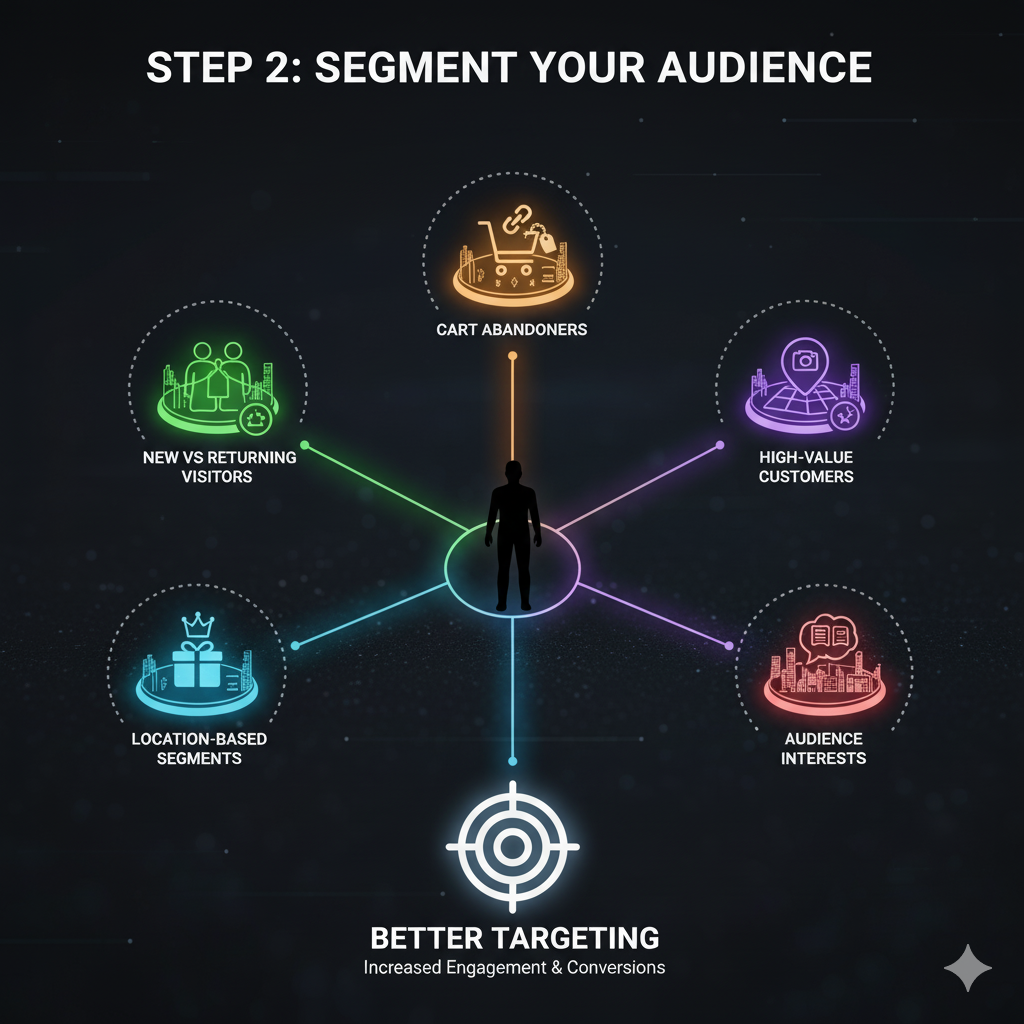
Step 3: Segment Your Audience for Better Targeting
Segmentation allows you to divide your audience into meaningful groups and deliver more relevant marketing messages. Not all customers are the same, so treating them as such can lower engagement and conversion rates.
Segmentation Examples:
- New vs. Returning Visitors: Craft campaigns to nurture first-time visitors while re-engaging loyal customers.
- Cart Abandoners: Target users who added items to their cart but didn’t complete the purchase with reminder emails or discount offers.
- High-Value Customers: Reward frequent buyers with VIP offers to increase loyalty and lifetime value.
- Location-Based Segments: Deliver location-specific promotions or content for better relevance.
Why it Works: By tailoring messages to each segment, you increase the likelihood of engagement, clicks, and conversions.
Step 4: Create Data-Driven Campaigns
Now that you have the data and goals in place, it’s time to craft campaigns designed to convert.
Audit Content:
Evaluate your existing content to see what drives results. Identify top-performing blogs, emails, or social posts and replicate their success. For underperforming content, either improve it or remove it.
Personalize Offers:
Leverage data to send highly relevant messages:
- Cart abandonment emails with discounts or incentives.
- Product recommendations based on past purchases.
- Dynamic ad creatives that change depending on the user segment.
Run A/B Tests:
Test headlines, images, CTAs, pricing, and landing page layouts. Even small tweaks can significantly impact conversion rates. Use these tests to determine the most effective approach and scale successful variations.
Use Real-Time Analytics:
Monitor metrics like click-through rate (CTR), conversion rate, and bounce rate daily. Adjust campaigns, budgets, or bids in real time to improve performance and ROI.
Step 5: Optimize the Sales Funnel
A successful marketing strategy requires optimizing every stage of the sales funnel.
- Top of Funnel (Awareness): Analyze which channels (social, search, referrals) bring in the right traffic.
- Middle of Funnel (Consideration): Retarget users who engaged but didn’t convert with personalized offers.
- Bottom of Funnel (Conversion): Use heatmaps and session recordings to find friction points in the checkout process.
- Retention Stage: Track customer lifetime value (CLV), churn rates, and purchase frequency to design retention campaigns that keep customers returning.
Step 6: Use the Right Tools
The right tools streamline data collection, analysis, and campaign execution. Here are some essentials:
| Tool Type | Recommended Tools |
|---|---|
| Analytics | Google Analytics, Mixpanel, Hotjar |
| CRM | HubSpot, Zoho, Salesforce |
| Ad Platforms | Google Ads, Meta/Facebook Ads, LinkedIn Ads |
| Email & Automation | Mailchimp, ActiveCampaign, Klaviyo |
Step 7: Build Authority & Earn Backlinks
SEO supports long-term data-driven marketing. By building authority, your content will rank higher, attracting organic traffic that converts.
- Create high-quality content others want to link to.
- Reach out to industry blogs and media outlets for backlinks.
- Use internal linking to strengthen site structure and help search engines understand your pages.
Step 8: Measure, Report & Iterate
Continuous measurement is critical to success. Track key performance indicators (KPIs) like conversion rate, CAC, CLV, and ROAS.
- Create weekly or monthly reports to review progress.
- Identify which campaigns or strategies are most effective.
- Make iterative improvements based on data insights to optimize ROI.
Common Mistakes to Avoid
Avoid these pitfalls to maximize results:
- Relying on guesswork instead of data.
- Ignoring audience segmentation.
- Failing to A/B test campaigns.
- Overlooking customer retention strategies.
- Using inadequate analytics or CRM tools.

Real-World Example
A SaaS company discovered that 60% of free users never converted to paid plans.
- They segmented users based on product usage duration.
- Ran email campaigns offering discounts and A/B tested “50% off” vs. “30% off + bonus.”
- Launched retention emails with onboarding tips for paying users.
Result: Conversion rates increased, customer acquisition costs dropped, and monthly recurring revenue grew.
Conclusion
Data-driven marketing is no longer optional—it’s essential for boosting sales in a smart, scalable way. By collecting the right data, setting measurable goals, segmenting your audience, personalizing campaigns, and optimizing your funnel, you can turn insights into real revenue.
But we understand: implementing a full-scale, data-driven strategy can be complex, time-consuming, and demanding on internal resources.
That’s where MediaPulse360 Digital Marketing Agency steps in.
We don’t just talk about data; we live it. Our team specializes in transforming raw customer data into high-performing, revenue-generating campaigns, ensuring you don’t miss out on sales opportunities.
Stop guessing and start dominating your market.
➡️ Ready to accelerate your sales with a proven data strategy?
Contact MediaPulse360 today for a free consultation and let us show you the ROI of truly data-driven marketing.